10 Open Source Hacking Tools And How To Defend Against Each
What Nmap, Wireshark, Aircrack-ng, Sherlock, mitmproxy, SQLMap and four AI tools actually do, where each one fails, and the specific setting to change afterwards.
From the video10 Open Source Tools That Feel Illegal To Be Free
Most people assume the software that breaks into things is hidden somewhere dark. It is not. It is sitting on GitHub with tens of thousands of stars, documented, packaged, and free.
Every tool below maps a network, reads traffic, cracks a password, profiles a person, or fakes a piece of reality. All ten are legal to download and legal to run on hardware you own. Point any of them at someone else and you are committing a crime in most countries. Here is what each one actually does, where it fails, and the specific thing you should change afterwards.
Is it legal to use these tools?
Downloading them is legal. Running them against your own laptop, your own router, your own accounts and your own test site is legal. Running them against anything you do not own or have written permission to test is not, and the relevant laws carry prison sentences: the Computer Fraud and Abuse Act in the US, the Computer Misuse Act in the UK, and equivalents almost everywhere else.
There is no grey area worth exploring here. "I was only curious" is not a defence, and network scans and WiFi captures leave logs.
The 10 tools and where to find them
Every one of these is a public repository. Nothing here is hosted anywhere unusual.
| # | Tool | Repository | What it does |
|---|---|---|---|
| 10 | Nmap | nmap/nmap | Scans a network and reports every device and open port |
| 09 | Wireshark | wireshark/wireshark | Captures packets and shows unencrypted traffic in plain text |
| 08 | Aircrack-ng | aircrack-ng/aircrack-ng | Recovers a WiFi passphrase from a captured handshake |
| 07 | Sherlock | sherlock-project/sherlock | Finds every account using one username across 400+ sites |
| 06 | mitmproxy | mitmproxy/mitmproxy | Decrypts and rewrites HTTPS traffic from your own device |
| 05 | SQLMap | sqlmapproject/sqlmap | Finds and exploits SQL injection to dump a database |
| 04 | MoneyPrinterTurbo | harry0703/MoneyPrinterTurbo | Turns one topic into a finished short video |
| 03 | Chatterbox | resemble-ai/chatterbox | Clones a voice from ten seconds of audio, in 23 languages |
| 02 | watermarks-remover | guillaumemeyer/watermarks-remover | Strips metadata that flags a file as AI generated |
| 01 | reverse-skill | zhaoxuya520/reverse-skill | Turns a coding assistant into an autonomous reverse engineer |
Nmap: find out which ports you have left open
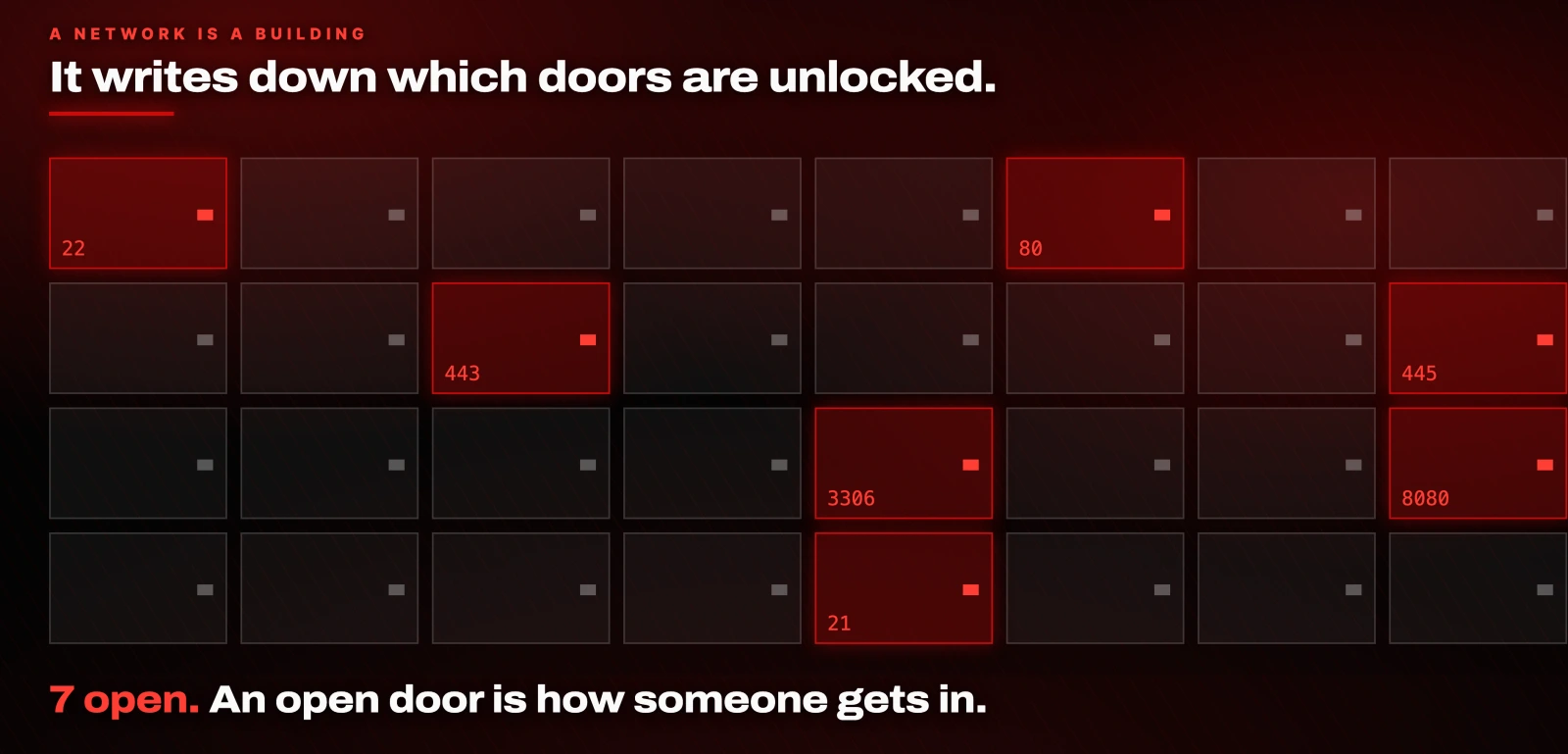
Nmap is a port scanner. Point it at an address and it reports every device it can reach, every open port on each one, and often the operating system behind them. A port is a door. An open port you forgot about is how people get in.
nmap -A 192.168.1.0/24On your own network that one command returns a floor plan: hosts, services, versions, and a guess at each OS.
Where it fails: Nmap is loud. A default scan lands in any competent security log immediately, and it finds doors without opening them.
What to change: run it against your own router and look for anything you did not knowingly turn on. UPnP, Telnet on 23, and forgotten admin panels on 8080 are the usual offenders.
Wireshark: see what your devices actually send
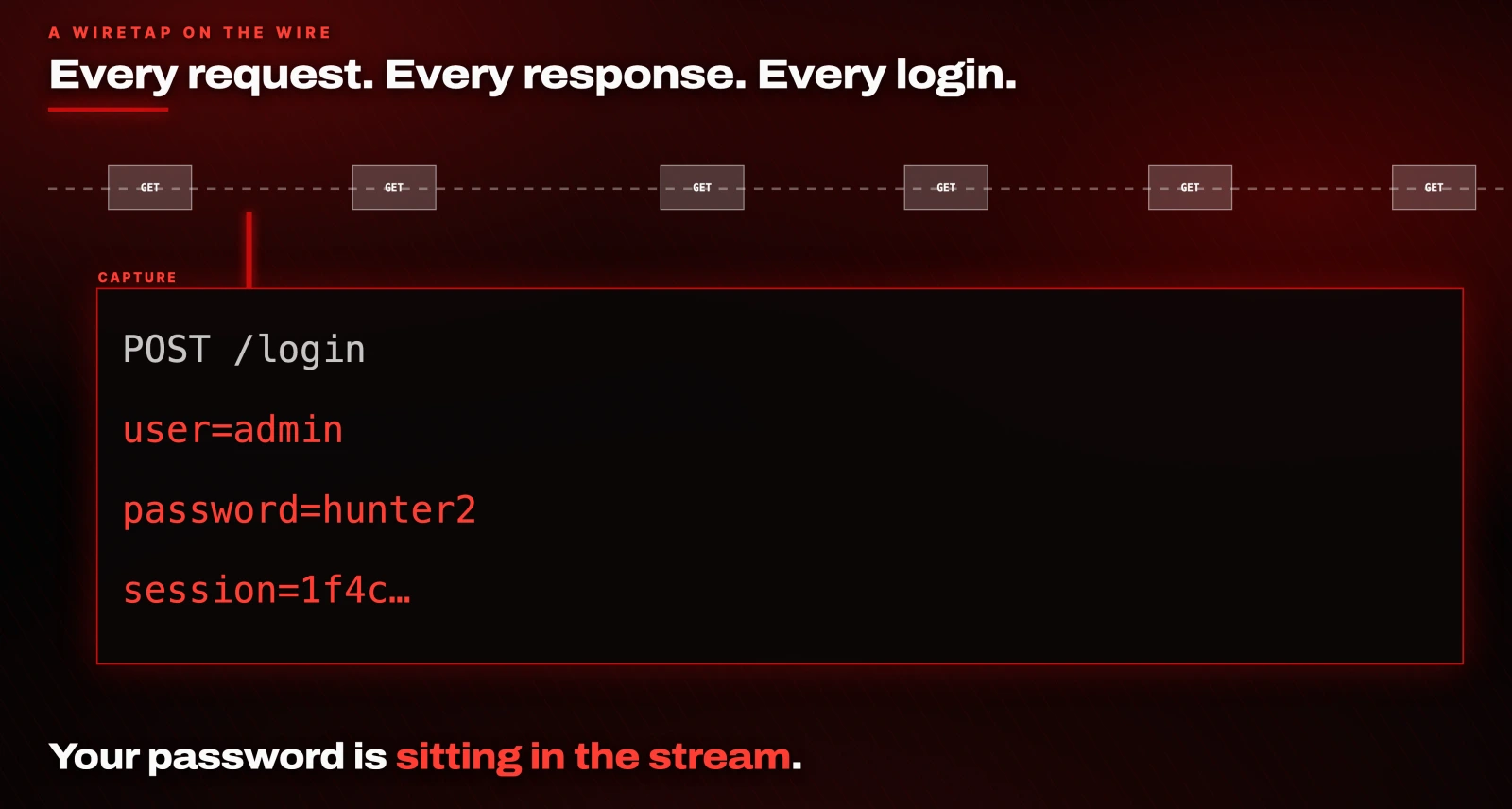
Wireshark captures packets moving across a network and shows you their contents. On an unencrypted connection, a login is not obscured in any way. It is plain text sitting in the stream.
sudo wireshark
# or headless:
sudo tshark -i en0 -Y 'http.request.method == "POST"'
Where it fails: most of the web finally encrypts traffic, so on a modern network you will mostly see TLS noise rather than readable passwords.
What to change: put your own phone on a network you control and watch it for ten minutes. The volume of background chatter from apps you are not using is the part that surprises people.
Aircrack-ng: why your WiFi password length matters
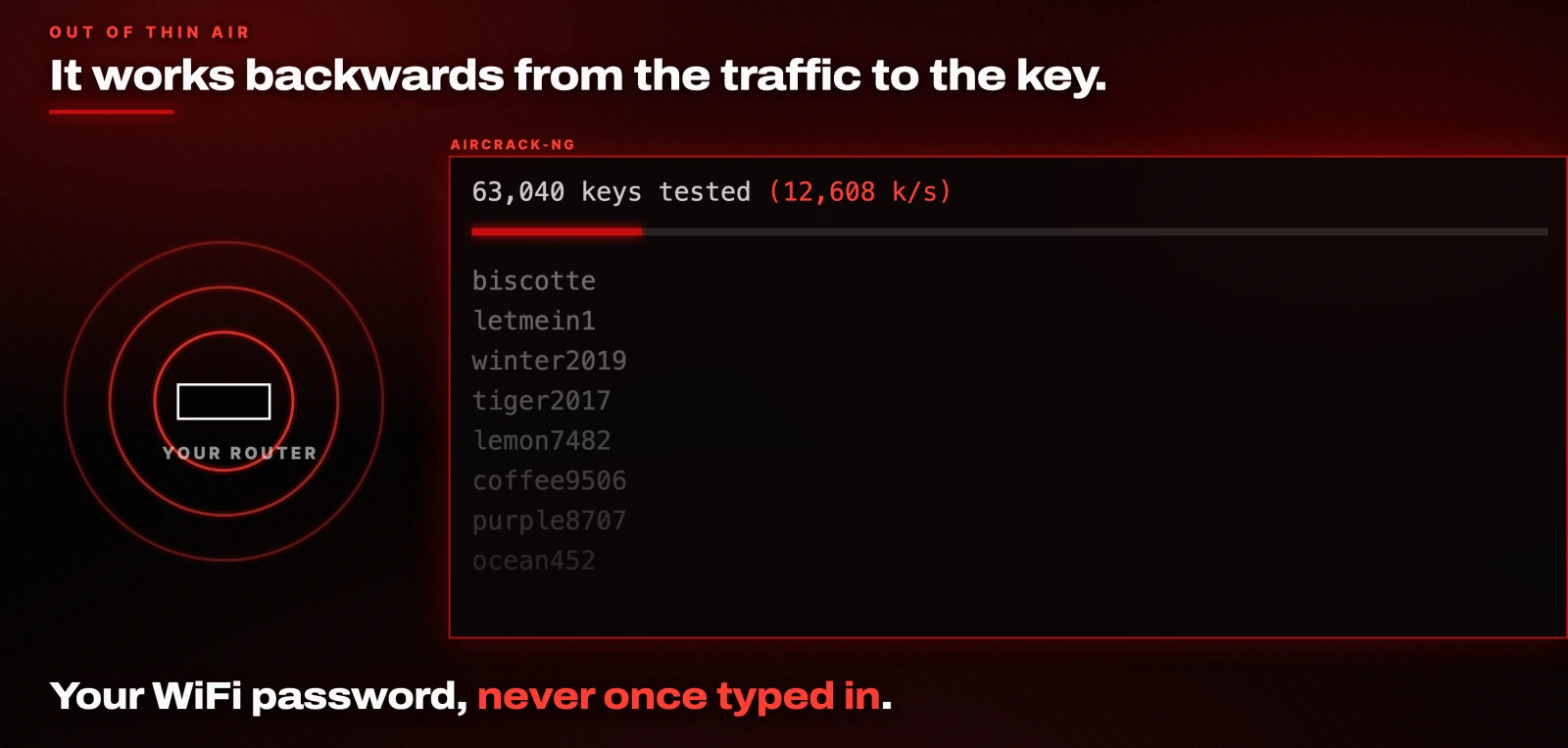
Aircrack-ng captures the encrypted handshake that devices exchange with a router, then works backwards from that capture to recover the passphrase. Nothing is ever typed in. The password is derived from traffic pulled out of the air.
Where it fails: it is a dictionary and brute force attack, so it only beats weak passwords. A long random passphrase on WPA3 will sit there for years and never break. It punishes laziness, not encryption.
What to change: this is the one with an immediate action. Go and make your WiFi password long and random tonight. Twenty characters from a password manager ends this entire category of attack for you.
Sherlock: find every account tied to one username
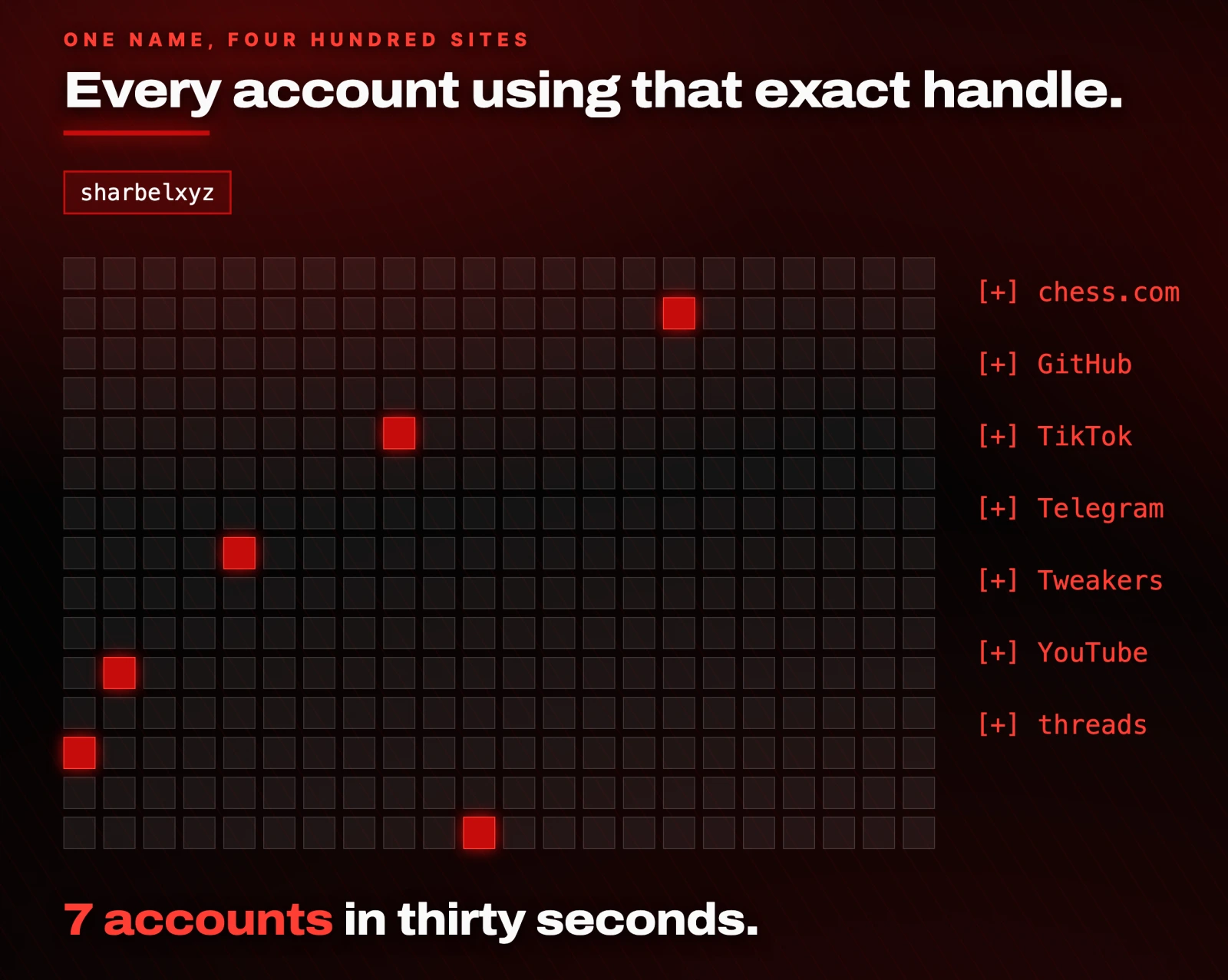
Sherlock takes a single username and checks it against more than 400 sites, returning every platform where that exact handle exists. It takes about thirty seconds.
python3 sherlock/sherlock.py your_usual_handleOne handle becomes a map of somebody's internet: the forums, the abandoned accounts, the platforms they forgot they joined.
Where it fails: it only catches people who reuse handles. Use a different name on every site and Sherlock returns almost nothing. It punishes consistency, and consistency is what most people have.
What to change: run it on yourself once. Whatever comes back is what a stranger sees in thirty seconds, and it is usually more than you remember leaving behind.
mitmproxy: see what your apps send behind your back
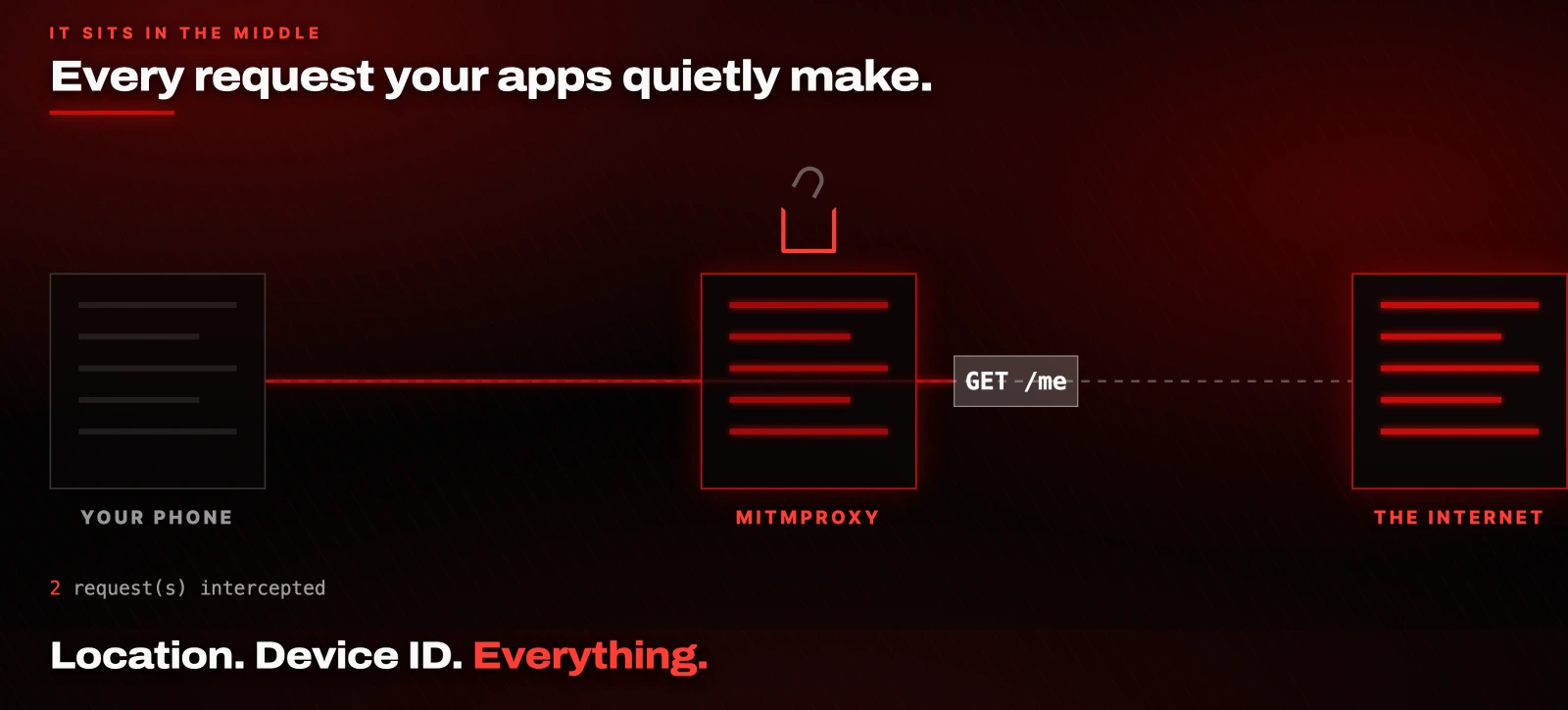
mitmproxy sits between a device and the internet, decrypts HTTPS, and shows every request an app makes. It also lets you modify responses before they arrive.
mitmproxy --mode regular --listen-port 8080Point a phone at it and open any ordinary app. Location, device ID, a list of what else is installed, all fired off constantly and none of it ever surfaced to you. Change a value in a response on its way in and the app will display your fake number without suspecting anything.
Where it fails, and this is the important part: it only works because you installed a certificate on your own device instructing it to trust the proxy. Nobody can do this to you remotely. They would need your unlocked phone in their hand.
What to change: that certificate requirement is the attack. If an app, a link, or a person ever tells you to install a profile or certificate to make something work, that is the whole thing. Refuse.
SQLMap: how database breaches actually happen
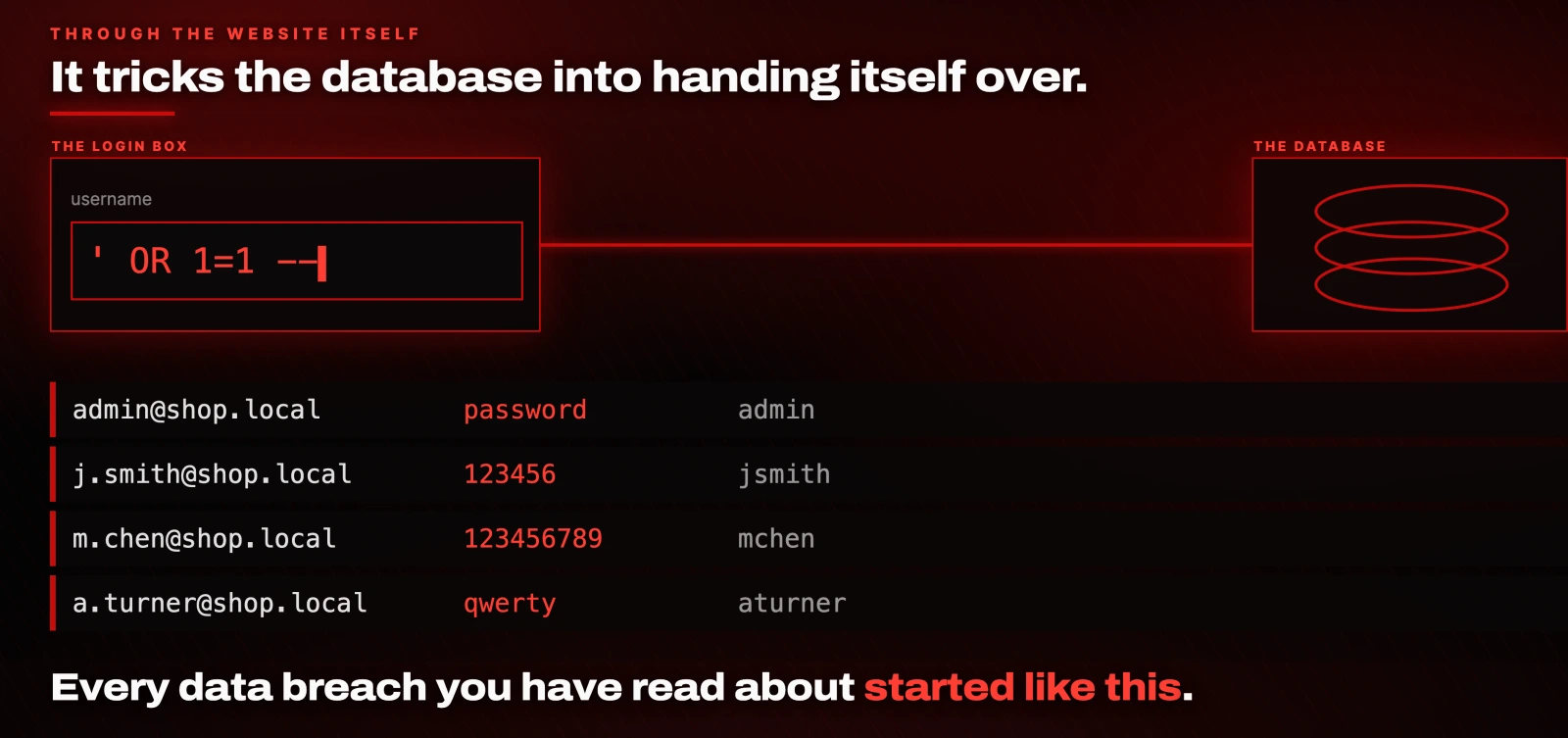
Most sites keep usernames, emails, passwords and orders in a database. SQLMap finds that database through the website itself, then tricks it into handing over its contents.
sqlmap -u "https://your-own-test-site.example/item?id=1" --batch --dbsAgainst a vulnerable target it enumerates the databases, lists the tables, and dumps the users straight out. Every breach headline you have read started with something that looked exactly like this.
Where it fails: it needs a real, unpatched injection flaw. A modern site using parameterised queries gives SQLMap nothing at all. It is devastating against careless code and useless against careful code.
What to change: if you ship anything with a database, use parameterised queries and an ORM. This is the tool most likely to put someone in prison fastest, so keep it on your own domains.
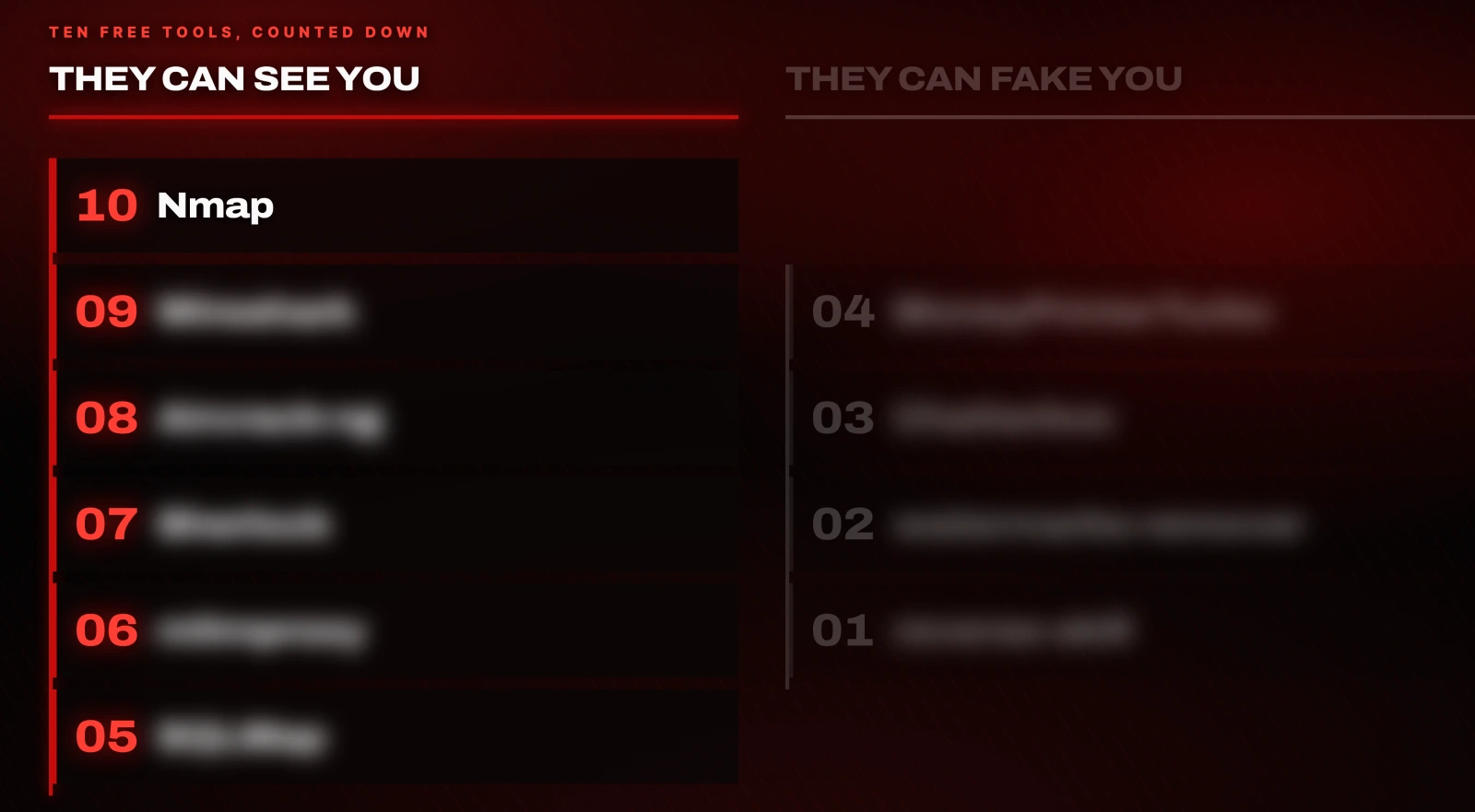
The four that manufacture reality instead of reading it
The first six tools read things that already exist. The next four make things that never happened, which is the half that should worry you more.
MoneyPrinterTurbo: a whole content pipeline from one word
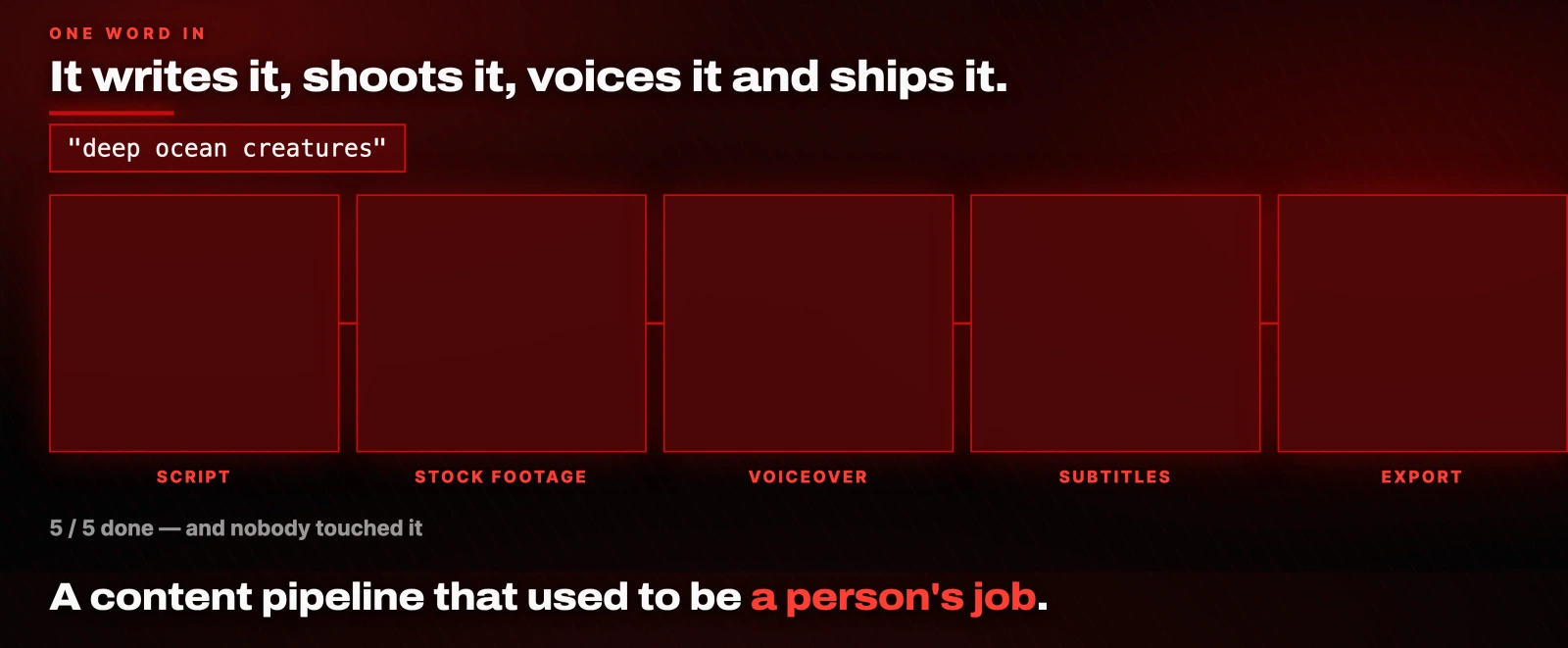
Give it a topic and it returns a finished vertical video: script, stock footage, voiceover, burned-in subtitles, export. It has over 110,000 stars, making it one of the most starred AI projects on GitHub.
Where it fails: it is free to run but not free to operate. The script and the voice still go through paid API calls, so each video costs real money, and the output is generic. It does not print money. It prints filler.
What to change: nothing defensive. Just recognise it. This is where a large share of the videos in your feed already come from.
Chatterbox: voice cloning from ten seconds of audio
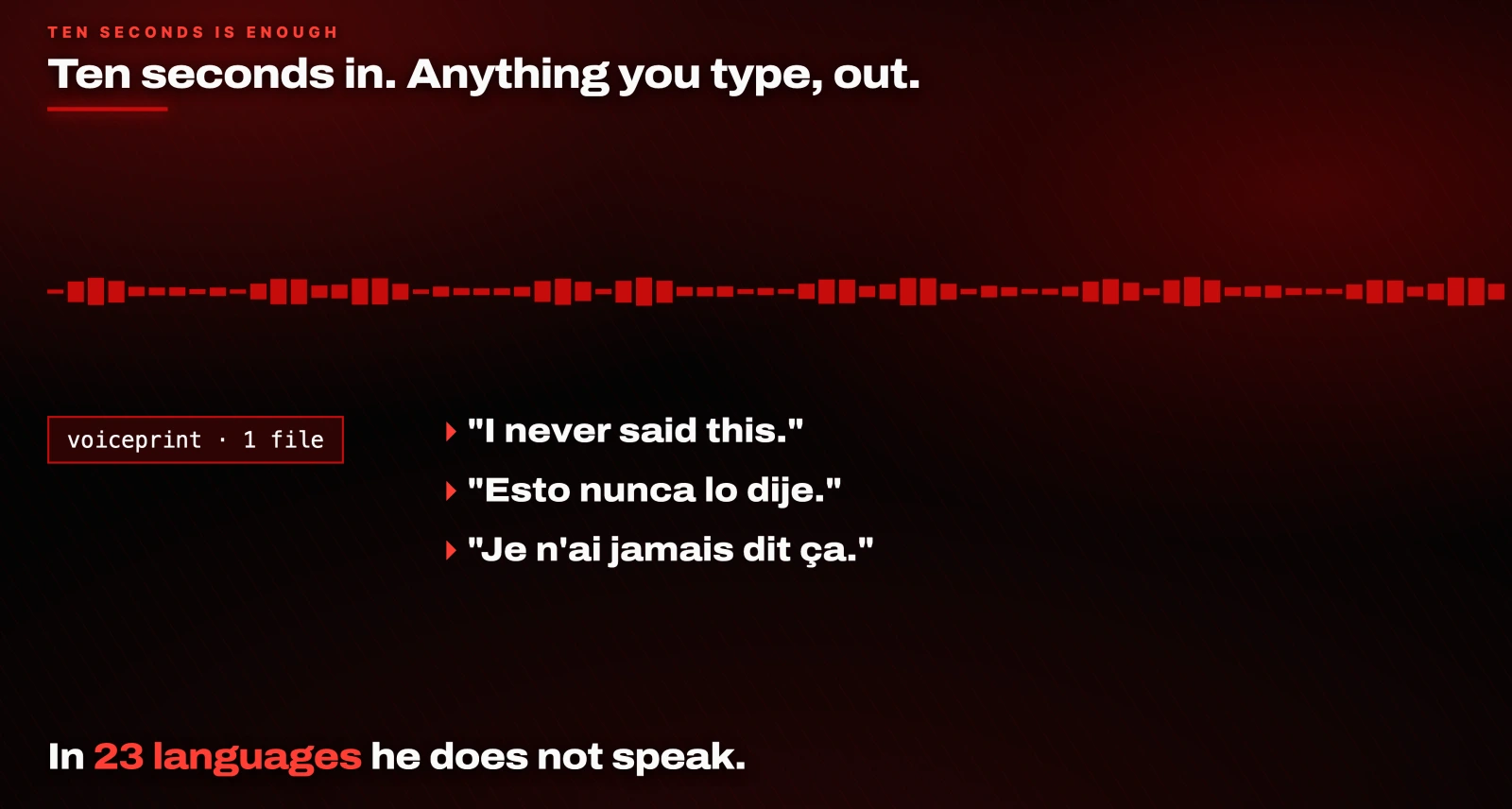
Chatterbox needs roughly ten seconds of someone speaking. From that it can make them say anything you type, in 23 languages. It is open sourced by Resemble AI, a real voice company giving away the product it sells.
Where it fails: every clip it generates carries an inaudible watermark that survives compression, so a detector can prove the audio was synthetic.
What to change: voice is no longer proof of identity. If your bank still offers a voice password, turn it off today. Agree a spoken code word with family for anything involving money.
watermarks-remover: the one that is overrated
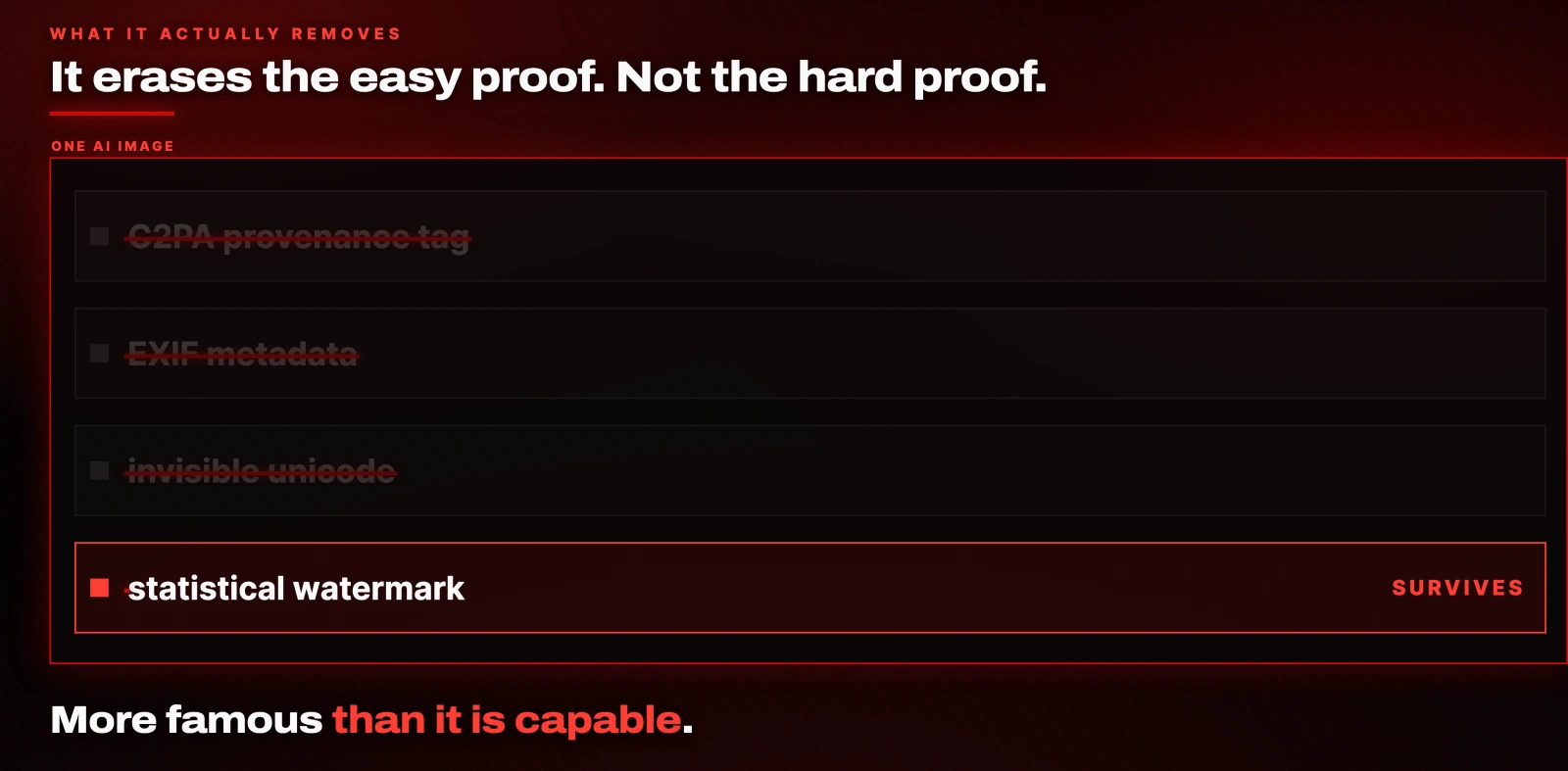
This strips the hidden markers that flag a file as AI generated: C2PA provenance tags, EXIF metadata, invisible Unicode characters. Run it on an AI image and a provenance check comes back clean.
Where it fails, and the internet is quietly misleading about this: it does not defeat statistical watermarks, the kind baked into the words a model chooses. The author has said as much himself. It removes metadata. Deeper watermark removal is not solved.
What to change: stop treating a missing AI label as evidence of anything. Absence of a tag proves nothing in either direction.
reverse-skill: pointing an autonomous agent at a binary
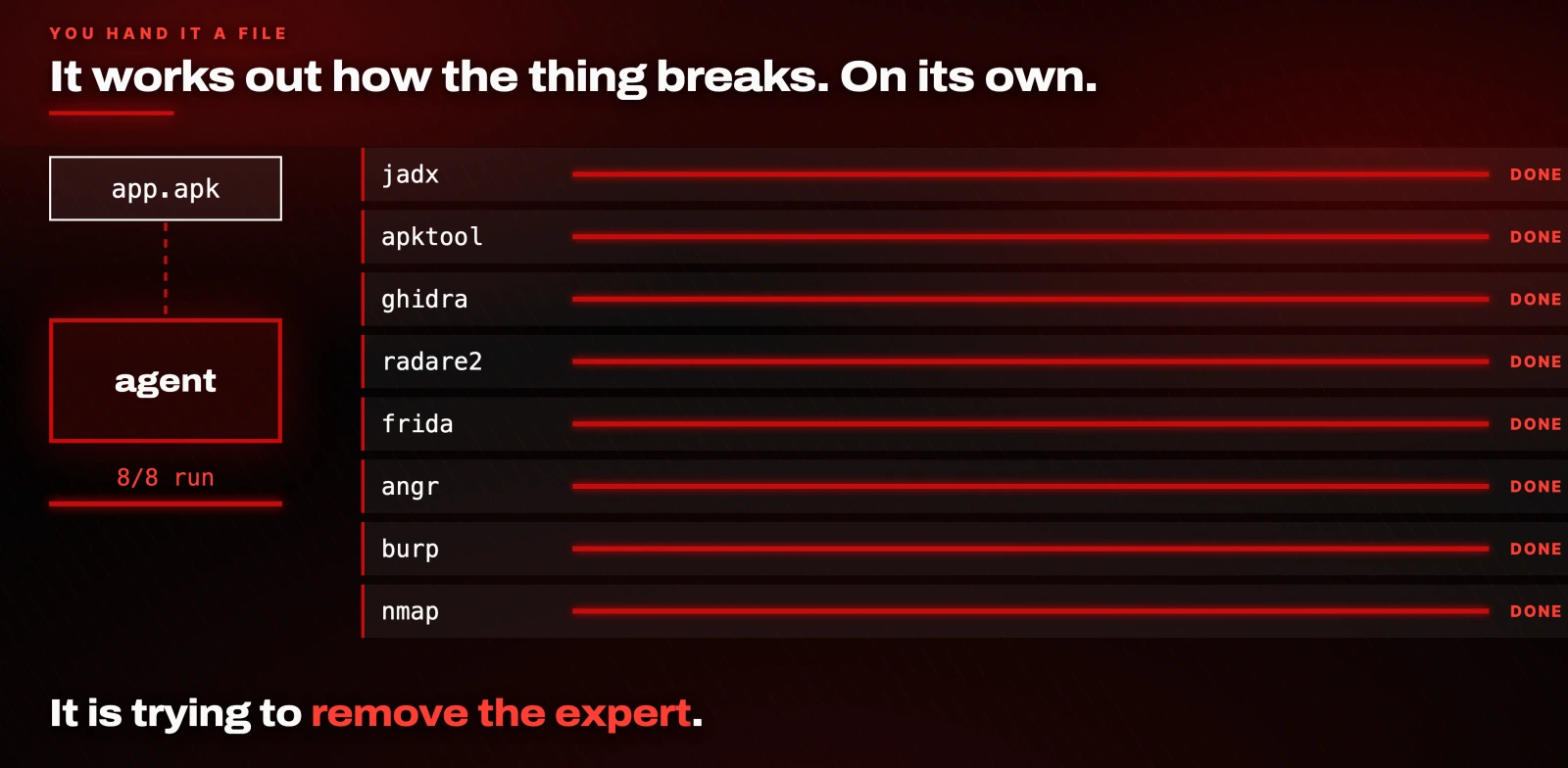
reverse-skill installs into Claude Code or Cursor and turns the coding assistant into an autonomous reverse engineer. You hand it a program, an app, or a compiled file, and it investigates on its own how the thing works and how it breaks, driving a toolchain of 33 tools including jadx, apktool, Ghidra, frida, binwalk and pwntools.
Where it fails: it is in beta, it is one developer, and it inherits every mistake the underlying model makes. Pointing an autonomous agent at real systems is a fast route to real trouble.
What to change: nothing yet. Understand it. Every other tool on this list is a skill someone had to learn. This one is an attempt to remove the expert entirely, which is why it sits at number one.
The five changes worth making today
- Make your WiFi passphrase long and random, and use WPA3 if your router supports it.
- Never install a certificate or configuration profile because an app or a link asked you to.
- Turn off voice authentication with your bank.
- Run Sherlock on your own usual handle and close what you find.
- Scan your own router with Nmap and shut anything you did not deliberately open.
What this list actually proves
Not one of these is hidden. There is no dark web, no invite, no gatekeeper. They are among the most starred, most public projects on the largest coding platform in the world. The barrier was never access. The barrier was only ever knowing they exist.
That cuts both ways. The same scanner that maps a network is the one that shows you your own open doors. The same model that fakes a voice is the one that catches it.
Pick one, run it against something you own, and act on whatever it shows you. That is the whole point.
Questions
- Is it legal to download and use these tools?
- Downloading them is legal, and so is running them against hardware and accounts you own or have written permission to test. Running them against anything else is a criminal offence under laws like the US Computer Fraud and Abuse Act and the UK Computer Misuse Act. Network scans and WiFi captures also leave logs, so the activity is rarely as invisible as people assume.
- Can someone use mitmproxy to read my HTTPS traffic without touching my phone?
- No. It only decrypts HTTPS because a certificate has been installed on the device telling it to trust the proxy. Doing that to someone else's phone requires physical access to an unlocked device. The realistic version of this attack is social: being talked into installing a profile or certificate yourself. Never install one because an app, a link or a person asked you to.
- How do I stop my WiFi password being cracked by Aircrack-ng?
- Length beats everything else. Aircrack-ng recovers a passphrase by testing candidates against a captured handshake, so it only defeats short or common passwords. A long random passphrase of around twenty characters on WPA2 or WPA3 makes the attack computationally pointless. Change the password and stop reusing one from a previous router.
- Does removing an AI watermark actually work?
- Only partly, and the tools are widely overstated. Metadata stripping removes C2PA provenance tags, EXIF fields and invisible Unicode markers, which is the easy proof. It does not defeat statistical watermarks embedded in the content itself, and the author of the best known tool has said so directly. The practical takeaway is that a missing AI label proves nothing in either direction.
- Which of these should I run first on myself?
- Sherlock, because it takes thirty seconds and needs nothing but your usual username. It returns every site where that handle exists, which is what any stranger can see about you in the same amount of time. After that, scan your own router with Nmap and close any port you did not deliberately open.

You made it to the end
That is the whole build. Want the next one?
Read next

10 Open Source Alternatives to Paid Subscriptions
Ten self-hosted repos that replace about $183 a month of software, with the honest catch on every one and the prompt to hand a repo to your agent.

Hermes Agent: 7 Real Jobs It Runs, With the Prompts
The seven jobs I hand Nous Research's free, open-source agent, and the exact prompt to copy for each one.

DeepSeek Harness Setup: A Free Coding Agent You Actually Own
The harness was always a separate purchase from the model. One of them just went to zero.