10 Open Source Alternatives to Paid Subscriptions
Ten self-hosted repos that replace about $183 a month of software, with the honest catch on every one and the prompt to hand a repo to your agent.
From the video10 GitHub Repos That Will Kill Every Subscription You Still Pay For
Ten open source repos replace about $183 a month of paid software: ComfyUI for Midjourney, AFFiNE for Notion, Harper for Grammarly, Cap for Loom, Stirling PDF for Acrobat, Activepieces for Zapier, Cline for Cursor, Jan for ChatGPT Plus, WhisperX for Descript, and OpnForm for Typeform. Every one has a catch, and this page names it.
That works out to roughly $2,196 a year. Two of the figures below are rounded down on purpose: Adobe Acrobat and Zapier are counted at $20 each, when Acrobat month to month is actually $29.99.
The full list, with prices and what each one replaces
| Repo | Replaces | Their price | The honest catch |
|---|---|---|---|
| ComfyUI | Midjourney | $10/mo, $120/mo at volume | Needs a real GPU. Cannot reproduce the Midjourney look. |
| AFFiNE | Notion | $10/member/mo | Databases are shallow. No roll-ups, no multi-level relations. |
| Harper | Grammarly | $12/mo | English only. Correctness checker, not a writing assistant. |
| Cap | Loom | $18/user/mo | Free tier caps links at 5 minutes and bars commercial use. |
| Stirling PDF | Acrobat Pro | $19.99/mo annual, $29.99 monthly | Editing text inside an existing PDF is still alpha. |
| Activepieces | Zapier | $19.99/mo Pro, $69 Team | 705 integrations against Zapier's roughly 8,000. |
| Cline | Cursor | $20/mo Pro, $40/user Teams | You pay per token. No tab completion. |
| Jan | ChatGPT Plus | $20/mo | Replaces the interface, not the model. |
| WhisperX | Descript | $24/mo Hobbyist, $35 Creator | Speaker separation needs a Hugging Face token. |
| OpnForm | Typeform | $29/mo for 100 responses | One maintainer. Free tier brands your forms. |
Three more, covered faster:
- Kdenlive replaces Adobe Premiere Pro at $22.99/mo. Twenty years old, GPL, with Whisper plugins that generate subtitles from speech. It is a traditional timeline editor, so there are no one-tap effects.
- Meetily replaces Otter at $16.99/mo. It records meeting audio locally, transcribes it and summarises it, and nothing leaves your machine. Speaker separation is a paid feature, and that is usually the thing you wanted.
- Typebot is the other answer to Typeform if you want it chatbot-shaped. Its cheapest hosted plan is $39 and the next is $89, so it only makes sense self-hosted.
The prompt to hand a repo to your agent
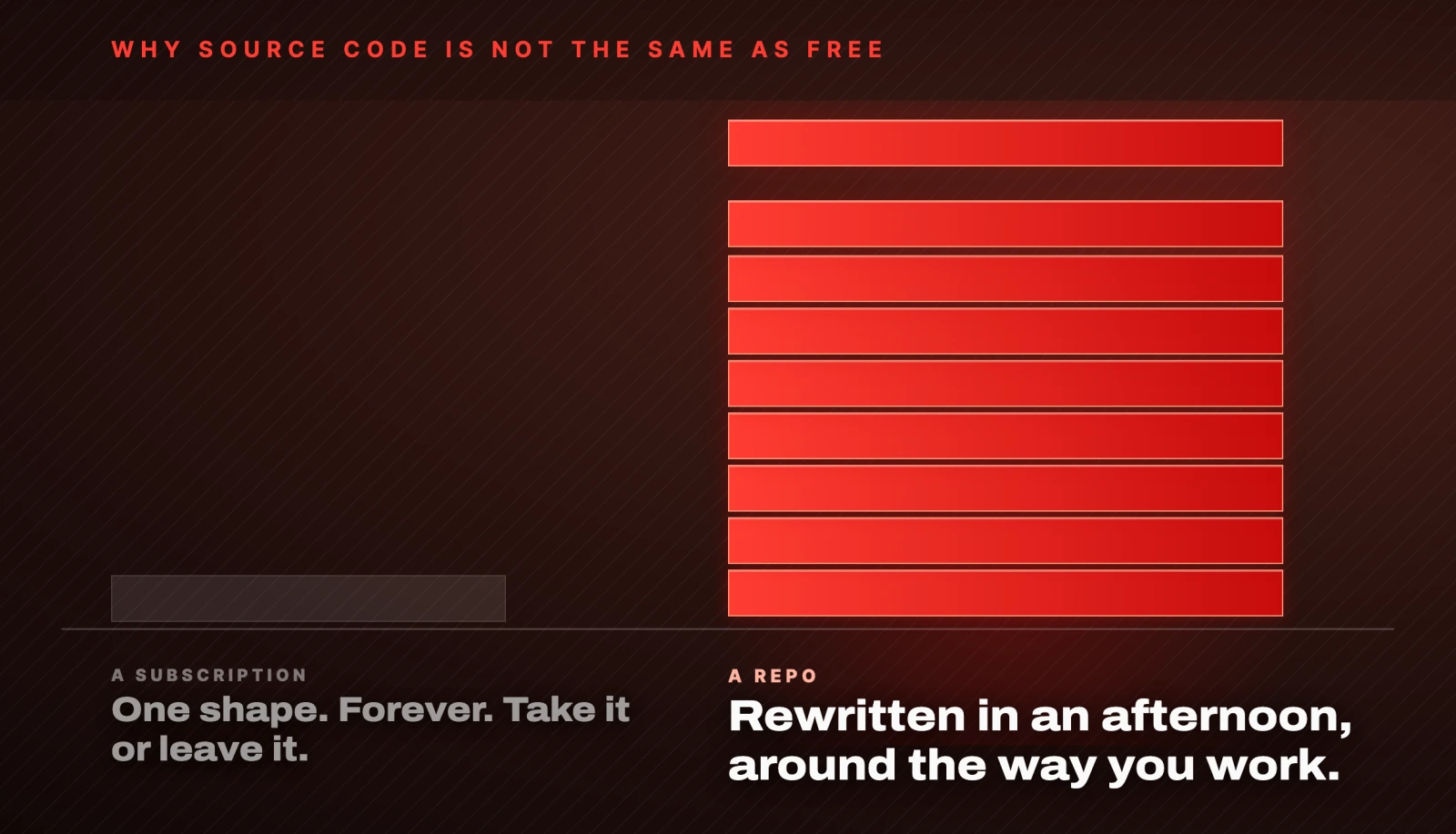
Installing these is the least interesting thing you can do with them. A subscription can only ever be the shape the vendor shipped. A repo can be rewritten in an afternoon by an agent already sitting on your machine.
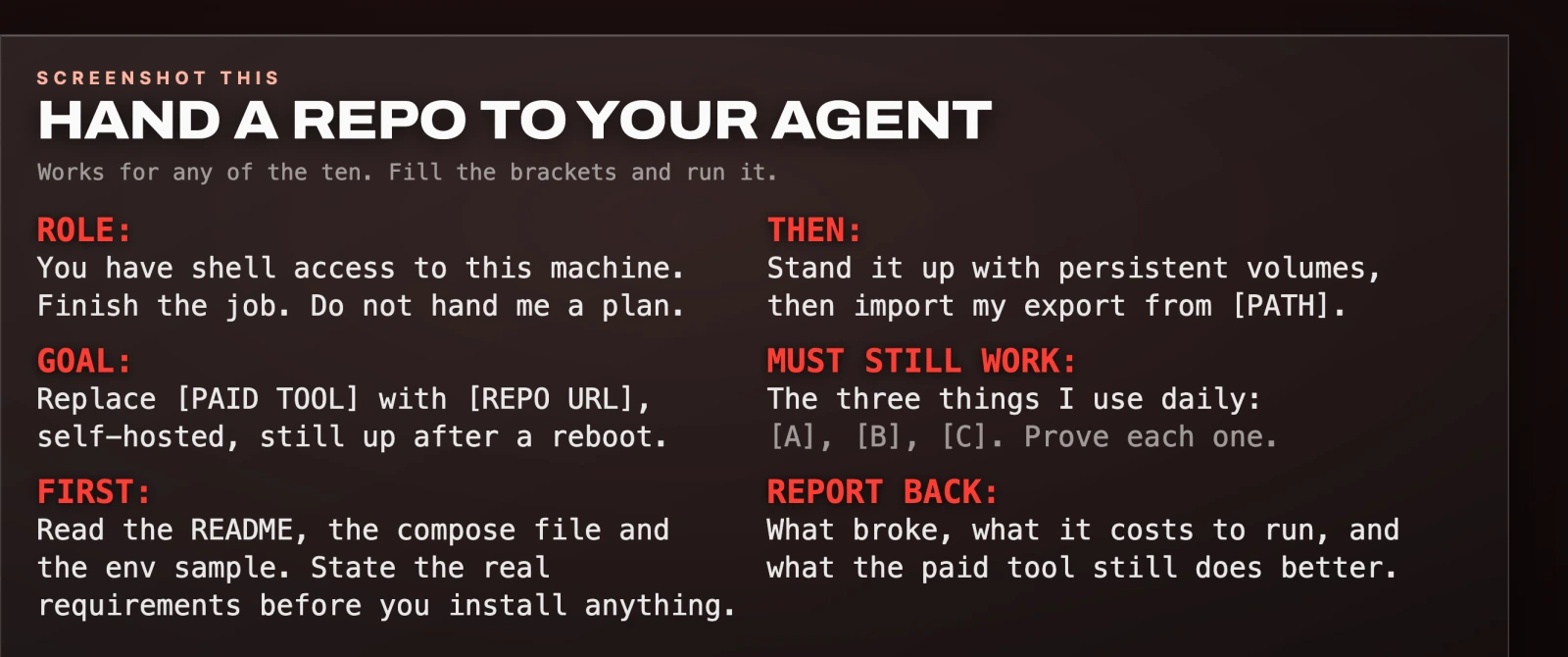
Fill in the brackets and run it:
ROLE
You have shell access to this machine.
Finish the job. Do not hand me a plan.

GOAL
Replace [PAID TOOL] with [REPO URL], self-hosted,
still up after a reboot.

FIRST
Read the README, the compose file and the env sample.
State the real requirements before you install anything.

THEN
Stand it up with persistent volumes,
then import my export from [PATH].

MUST STILL WORK
The three things I use daily: [A], [B], [C].
Prove each one.

REPORT BACK
What broke, what it costs to run,
and what the paid tool still does better.
The last two blocks are what make it useful. Without "must still work" an agent will declare victory on a container that boots. Without "report back" you never find out that the thing costs $40 a month in tokens.
Which ones are a straight switch
Harper is the fastest on the list, about two minutes. It is built by Automattic, the company behind WordPress, it is Apache licensed, and it is written in Rust, so it is instant. There is no account, no tier and no server. It runs as a Chrome extension, a Firefox extension, in VS Code and Obsidian, and as a language server for everything else. If you only ever wanted spelling and grammar, you were paying $144 a year for it. It will not run inside Gmail unless you turn Gmail's own checker off.
OpnForm beats Typeform on the one number that matters. Typeform's $29 plan gets you 100 responses a month, not 100 forms. OpnForm's free tier is unlimited forms and unlimited submissions, and it has the focused mode Typeform is actually bought for: one question at a time, full screen, progress indicator, keyboard navigation. It ships an importer that pulls an existing Typeform straight in, so you are not rebuilding anything.
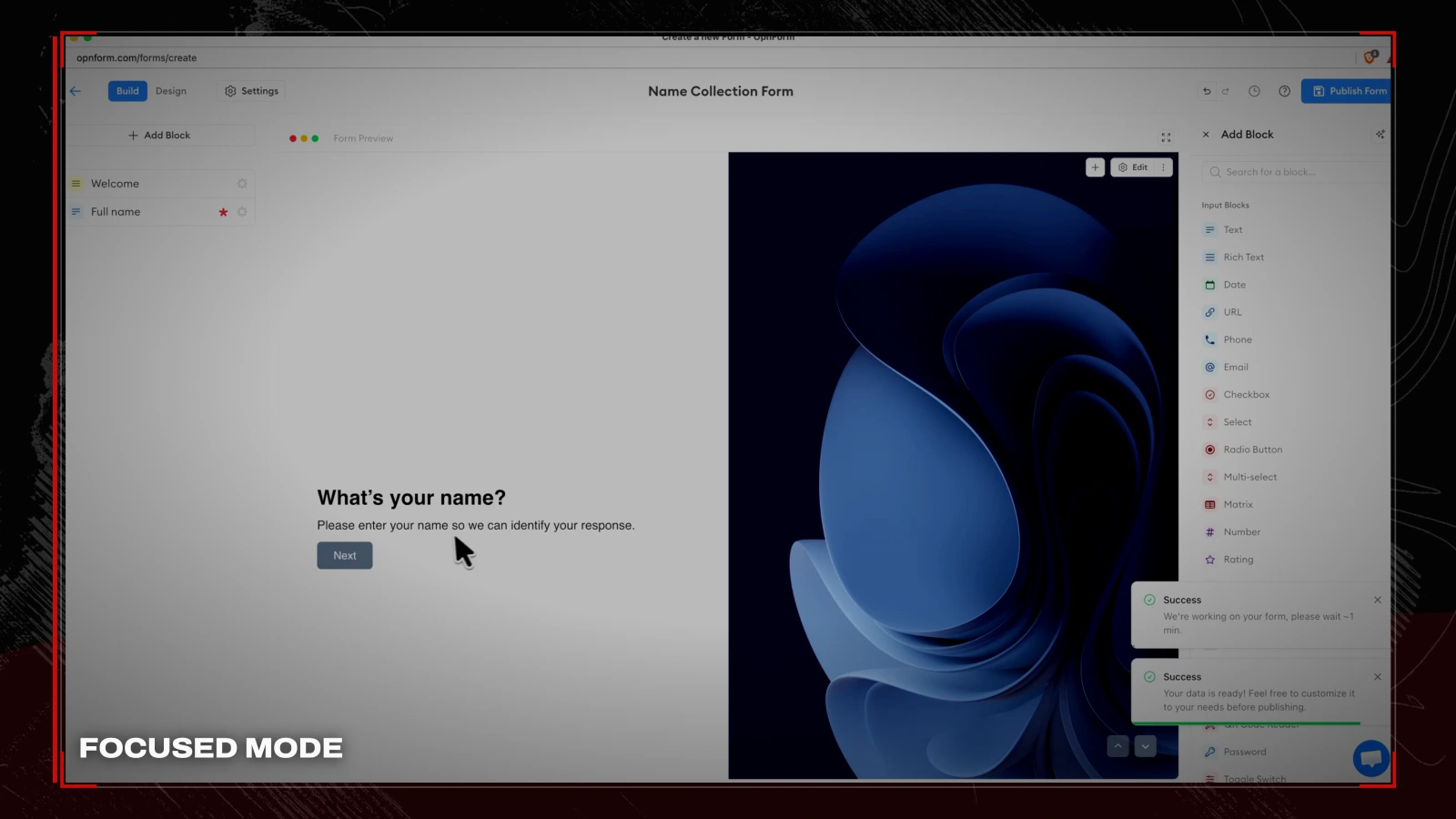
The catch is real though. It is a small project with essentially one maintainer, so do not build a business on it without a backup export. Removing its branding from your forms is $25 a month, which is still less than Typeform.
Stirling PDF runs in your browser from one Docker command and does over 55 things to a PDF: merge, split, rotate, OCR, redact, compact, sign with a certificate, convert to and from Office.
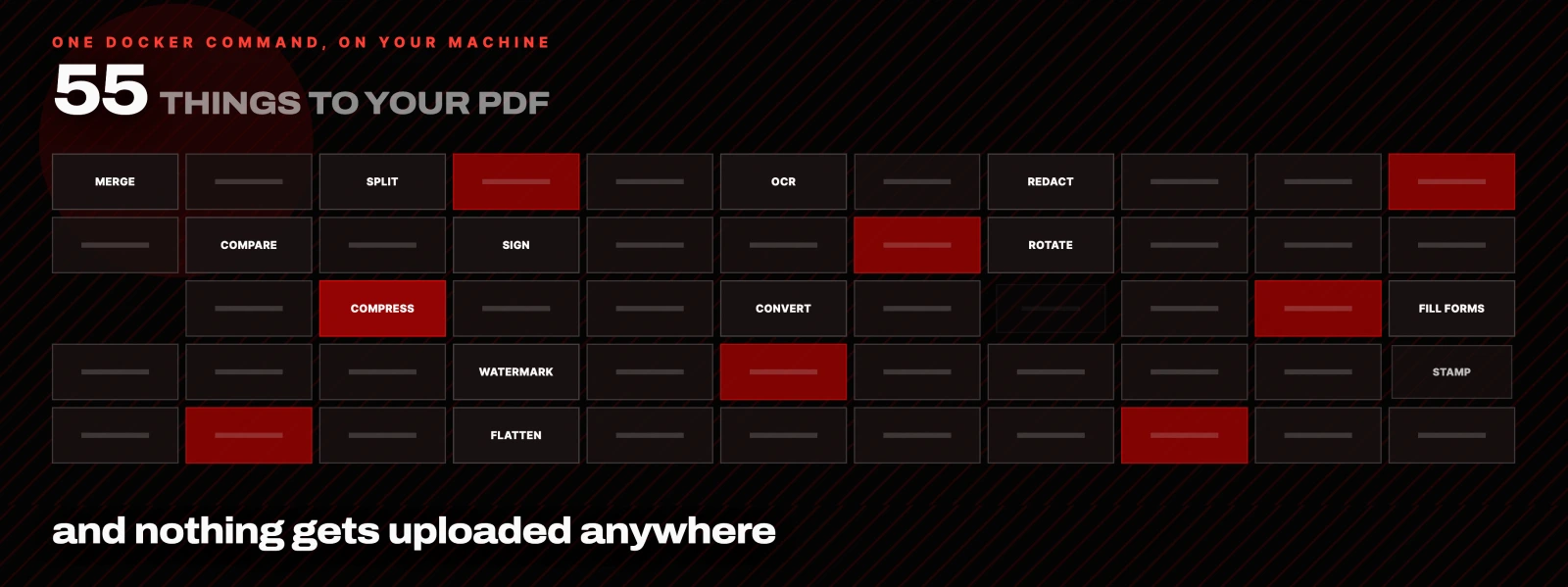
Nothing gets uploaded anywhere, which is the actual argument against a cloud PDF tool.
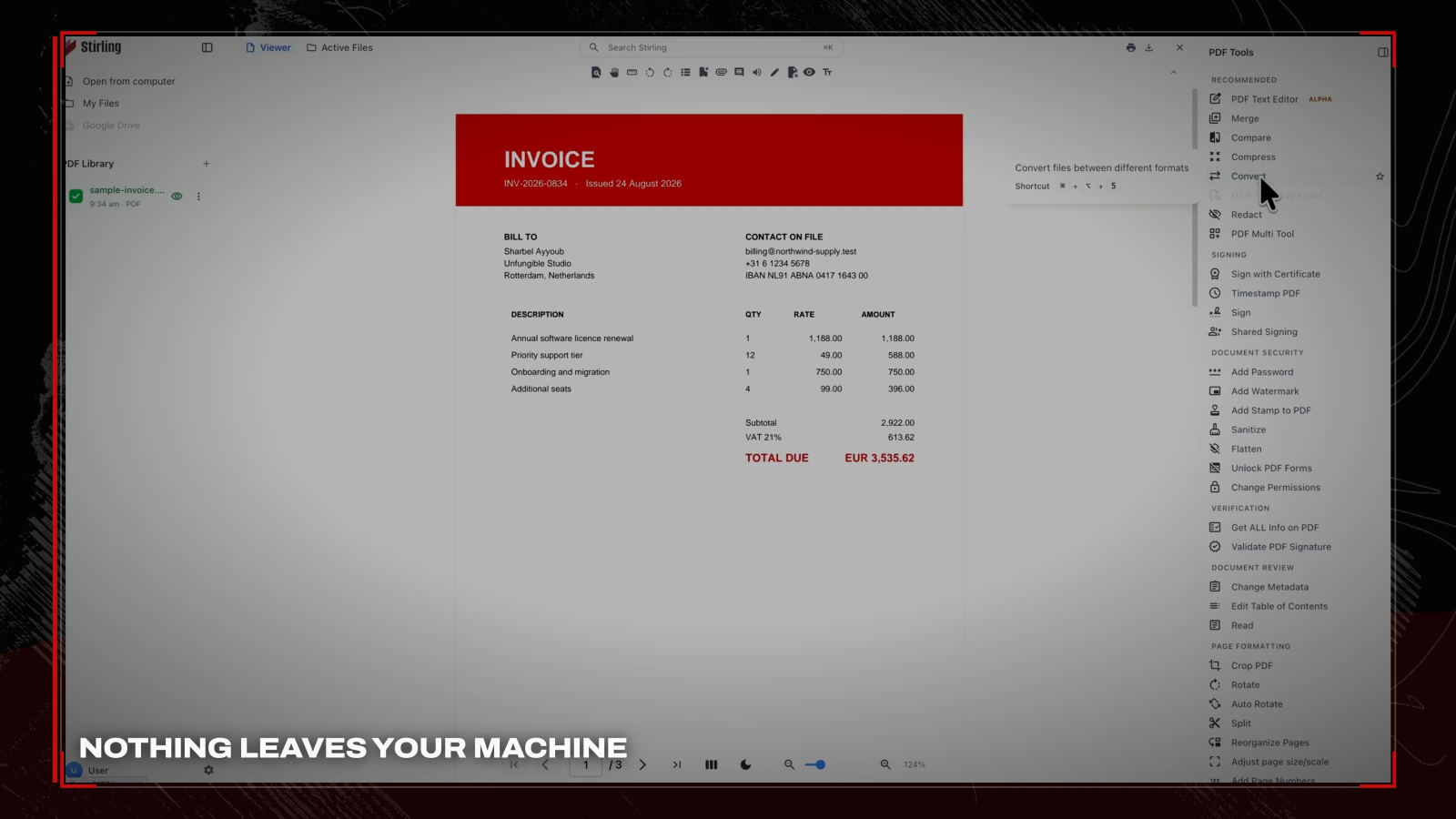
Its one weak spot is specific and worth knowing: editing the text inside an existing PDF, which is the single thing most people buy Acrobat for, ships as an alpha feature. Everything around it is excellent. Switch unless you rewrite PDF text for a living.
Cap is a better looking recorder than Loom, and its instant mode uploads while you record, so the link exists the second you stop. Be careful with the pricing. The free tier caps shareable links at five minutes and does not allow commercial use. A $29 a year licence gives you commercial rights and unlimited local recording, which against Loom's $216 a year is 87% off. That licence does not include cloud sharing. For unlimited shareable links you either pay $12 a month, still cheaper than Loom, or self-host with Docker, a database and object storage.
Which ones depend on how you work
ComfyUI is a node graph where you wire up open image and video models and run them yourself. No generation limits, no queue, and control Midjourney does not sell at any price.
You cannot fully reproduce the Midjourney look, and you need a real graphics card. Keep paying Midjourney if you want that specific look. Switch if you want control and own the hardware.
AFFiNE is documents, wikis, databases and an infinite whiteboard in one app, and Notion does not have the whiteboard. You do not have to host it: the cloud free tier is permanent, 10GB and three members, against $10 per person per month. Switch if Notion is where you write and plan. Stay if Notion is where you run a relational database with formulas across tables.
Cline lives inside VS Code, plans, edits files and runs terminal commands, all with your own API key. There is no seat and no per-user fee. Light use lands around $12 to $15 a month, so you save. All-day sessions on a premium model beat $20 comfortably, so you do not. You also lose Cursor's tab completion, a model they trained themselves, and it is the thing people miss most. Switch if you use an agent more than autocomplete.
Jan is a real desktop app with no Docker and no terminal. What it actually replaces is the interface, not the model. You connect your own API keys, keep every model in one app, and pay per token instead of $20 flat. Local models on a normal laptop are worse at recall and flatter in tone, and you lose web search and multi-modal features. If you live inside ChatGPT all day you will pay more, not less.
WhisperX transcribes at around 70 times real time with word-level timestamps and speaker separation. Speaker separation is the part worth stopping on: knowing who said what is what makes a transcript usable, and most tools charge for it.
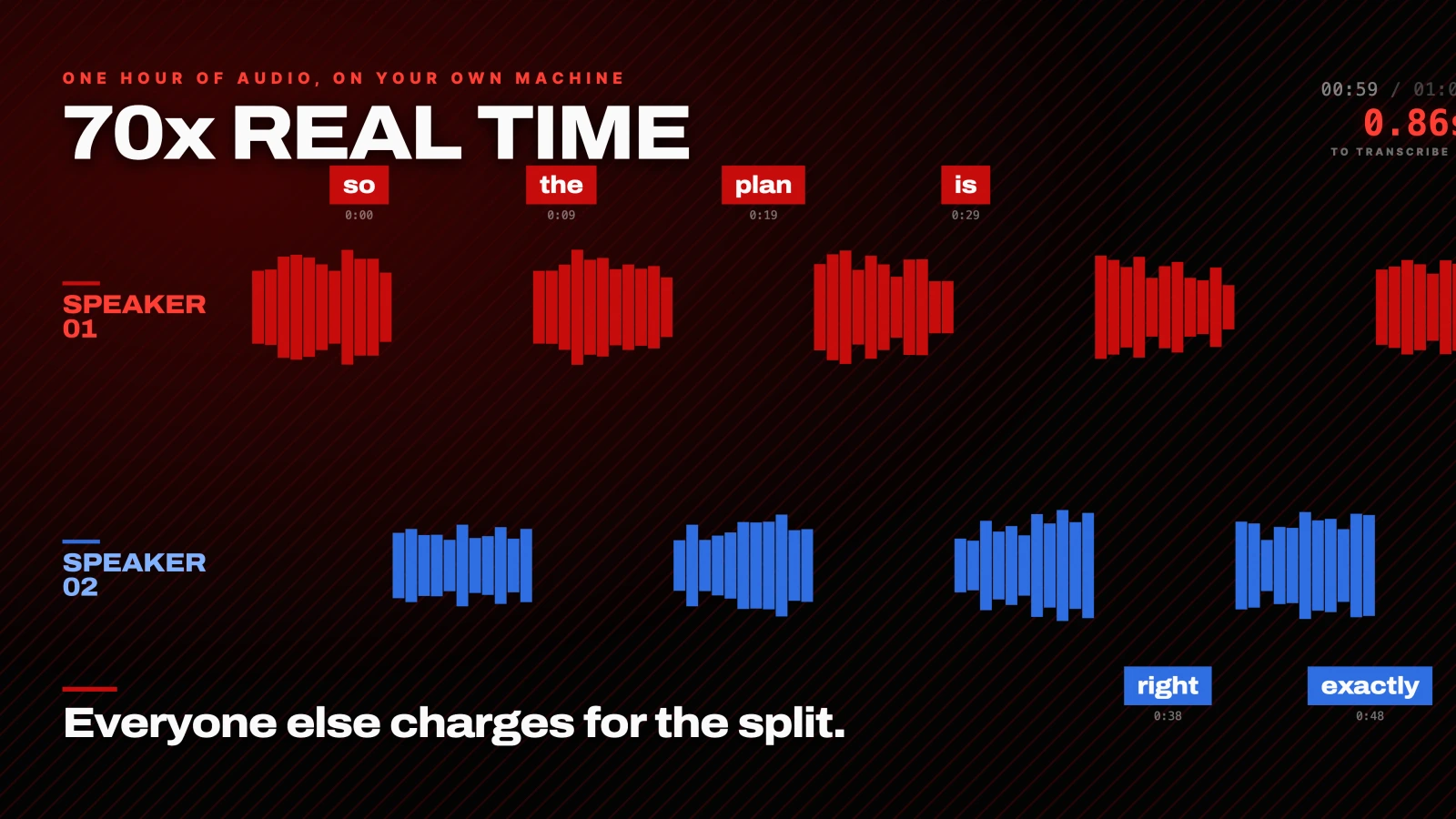
Setting it up needs a Hugging Face account and a token. Keep Descript if you edit video by editing text. Switch if you just need accurate transcripts with speakers.
The one that needs a check first
Activepieces is the closest thing to a Zapier clone that exists, with a visual builder, drag and drop, and per-step testing. Self-host it and there is no cap on runs, users or flows. Zapier's entire pricing model is a task meter, and self-hosting removes the meter.
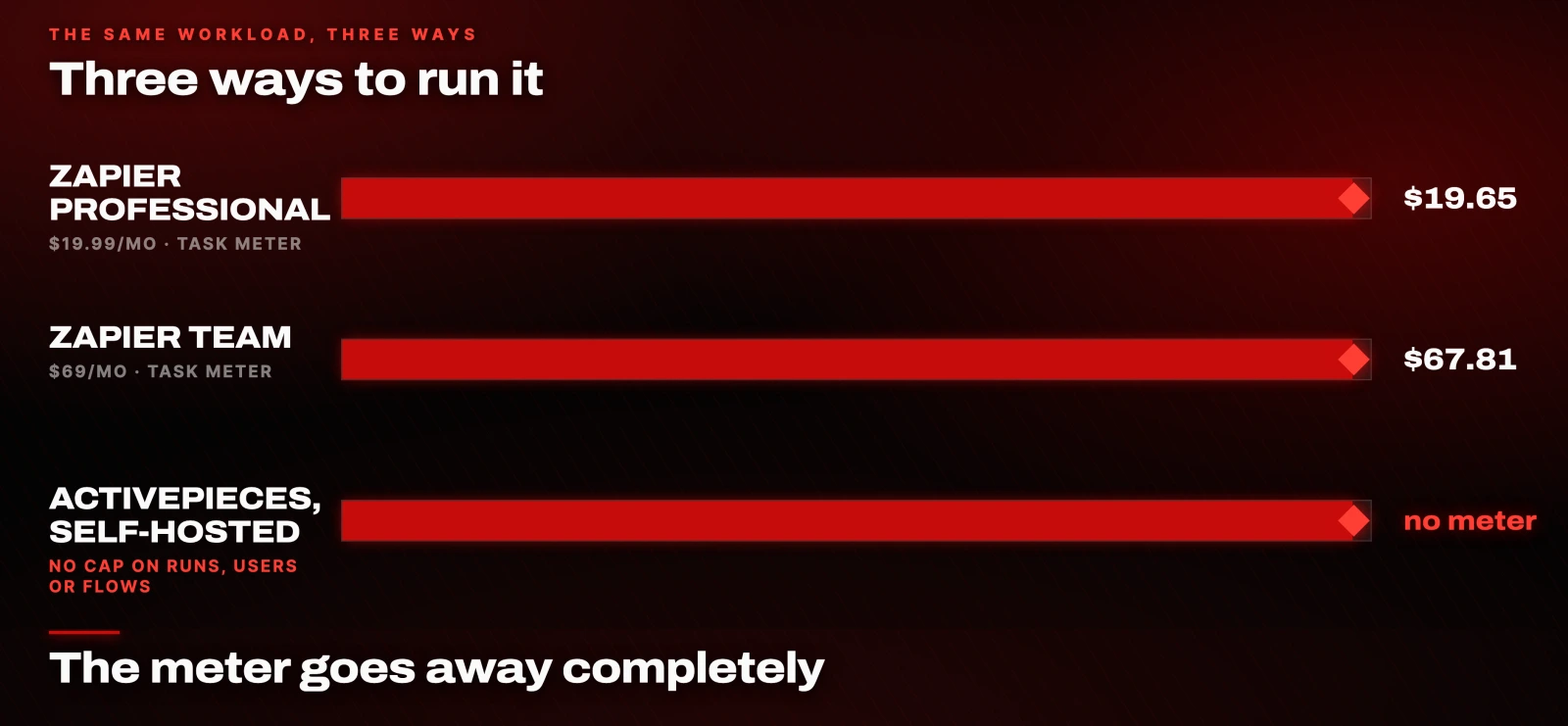
It has 705 integrations against Zapier's roughly 8,000. For mainstream apps you are fine. For anything regional or long tail, check the piece exists before you commit, because the alternative is writing it in TypeScript. The community edition also leaves out projects and API access.
Package names that will install the wrong thing
This one costs people an afternoon. Several of these names are already taken on the public registries by unrelated projects:
npm install harperis a database. The correct package isharper-lson crates.io.pip install harperis an audio library.npm install capis a packet-capture binding.npm install janis an HTTP client.- For Cline use
npm install cline, and for WhisperX usepip install whisperx.
One licence note as well: Stirling PDF is MIT with proprietary carve-outs, not plain MIT. Both app/proprietary and app/saas exist in the repo. That matters if you are deploying it inside a company.
What you are actually paying for
The interesting thing about this list is not that free versions exist. Free versions have always existed. It is that the honest catch on almost every one of these is no longer a missing feature. It is operations: uptime, backups, graphics cards, certificates.
Which means what you are paying for in nearly every subscription you have is somebody else being on call. Sometimes that is worth $20 a month. Sometimes it is worth nothing.
What to do next
Do not try to switch ten things this week. Pick the single most expensive line on your card that you could lose for a month without anyone noticing, then run the prompt above against that repo. Give the agent your real export and your three daily tasks, and read the report it comes back with rather than the README.
Then leave it alone for a month. If you never think about it again, cancel the subscription. If you find yourself missing the paid tool by the second week, you just learned that the $20 was buying you something real, and that is worth knowing too.
Questions
- What is the best open source alternative to Notion?
- AFFiNE. It gives you documents, wikis, databases and an infinite whiteboard in one app, and its cloud free tier is permanent at 10GB and three members against Notion's $10 per member per month. The limit is the databases: there are no roll-ups and no multi-level relations, so it will not carry a relational Notion setup with formulas across tables.
- Can I really replace Zapier by self-hosting?
- Yes, with Activepieces, and self-hosting removes the task meter entirely: no cap on runs, users or flows. Check your integrations first. Activepieces has 705 pieces against Zapier's roughly 8,000, so mainstream apps are covered but regional or long-tail services may not be. The community edition also leaves out projects and API access.
- Is Stirling PDF a full Adobe Acrobat replacement?
- For almost everything except the headline feature. It runs from one Docker command and does over 55 operations including OCR, redaction, certificate signing and Office conversion, all without uploading your file anywhere. But editing the text inside an existing PDF, which is what most people buy Acrobat for, is still an alpha feature.
- Does switching to Cline actually save money over Cursor?
- It depends on how you use it. Cline runs on your own API key, so there is no seat fee, and light use lands around $12 to $15 a month against Cursor's $20. All-day sessions on a premium model cost more than $20. You also lose Cursor's tab completion, which is a model they trained themselves.
- Why does npm install harper give me the wrong package?
- Several of these project names are already taken on the public registries. `npm install harper` is a database and `pip install harper` is an audio library. The correct package is harper-ls on crates.io. The same trap applies to `npm install cap`, which is a packet-capture binding, and `npm install jan`, which is an HTTP client.

You made it to the end
That is the whole build. Want the next one?
Read next

Hermes Agent Setup: Build a Free 24/7 AI Agent From Scratch
Somewhere to run, a model to think with, a channel to reach you. About 30 minutes, no code, and it can cost nothing.

Hermes Agent: 7 Real Jobs It Runs, With the Prompts
The seven jobs I hand Nous Research's free, open-source agent, and the exact prompt to copy for each one.

10 Open Source Hacking Tools And How To Defend Against Each
What Nmap, Wireshark, Aircrack-ng, Sherlock, mitmproxy, SQLMap and four AI tools actually do, where each one fails, and the specific setting to change afterwards.